

Blog
Wheel washing is one of those site requirements that often gets underestimated during project planning - until enforcement notices, complaints from local residents or dirty public roads make it impossible to ignore. For contractors working across construction, rail and highways in the UK, having the right wheel wash facility in place from day one is not just good practice. In many cases, it is a planning condition or contractual obligation.
This article looks at how wheel washing actually works on site, what a typical hire setup involves, and how to choose the right system for your project.
Why Wheel Washing Matters on Construction Sites
Every time a loaded vehicle leaves a wheel wash construction site, it carries the potential for mud, silt and debris to transfer onto public roads. This creates several problems: road safety hazards, complaints from local authorities and communities, and potential enforcement action from the local planning authority or Highways England on major schemes.
Beyond public relations, there are real safety risks. Mud deposited on roads reduces grip and visibility. Heavy goods vehicles and plant equipment carry significant amounts of material on their tyres and wheel arches - particularly during groundworks, earthworks and demolition phases when ground conditions are at their worst.
A properly specified site wheel wash removes mud and debris from tyres and underbodies before vehicles exit the site boundary. Combined with a boot wash station for operatives on foot, a well-planned wash setup forms part of a broader approach to site hygiene and environmental control.
How Wheel Wash Systems Work
Most wheel wash facilities used on UK construction sites operate on a drive-through basis. Vehicles pass through at low speed while jets of water target the tyres, wheel arches and underside of the vehicle. Larger systems also include roller tracks or rumble strips to dislodge compacted mud before the water jets activate.
Water from the wash process is typically collected and directed into a settlement or recycling system. This prevents contaminated water - which can carry silt, oils and other site runoff - from entering surface drains or local watercourses. Settlement tanks are often deployed alongside wheel wash systems to manage this water responsibly and support environmental compliance on site.
Once cleaned, the water can be recirculated through the system, reducing overall water consumption. Fresh water top-up is managed through connection to a static water storage tank or a water bowser, depending on the site setup and available infrastructure.
What to Consider When Specifying a Wheel Wash System
Not all sites need the same solution. Getting the specification right depends on a number of factors:
- Traffic volume and vehicle types - A site with a high throughput of articulated lorries and 8-wheel tippers needs a larger, more robust system than one served by smaller plant vehicles.
- Ground conditions - Highly contaminated or wet ground conditions create heavier mud loading on tyres, meaning more powerful wash capacity may be needed.
- Site layout and traffic management - The wheel wash point should be positioned so that all vehicles must pass through it before reaching the site exit. This typically means integrating the system into the one-way traffic management plan from the outset.
- Planning conditions - Many planning consents specify that a wheel wash must be operational before any soil-disturbing works begin. It is worth checking requirements early and ensuring the hired system meets them.
- Duration of works - For short groundworks packages, construction wheel wash hire is usually the most practical and cost-effective route. For longer programmes or permanent depots, purchase may be worth considering.
Boot Wash Stations: The Overlooked Part of Site Hygiene
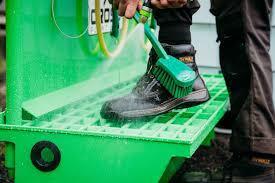
While wheel wash systems handle vehicle-borne contamination, a boot wash station addresses the same problem for operatives moving on foot. On sites where operatives pass between welfare facilities and working areas throughout the day, boots carry significant amounts of mud and potentially hazardous material.
Boot wash stations are straightforward units - typically compact, water-fed brushes or jet systems positioned at cabin and welfare entrances. They help control contamination spread within the site, protect welfare areas, and contribute to overall site hygiene standards. On larger projects with multiple welfare compounds, more than one unit may be needed.
They are often hired alongside wheel wash systems as part of a broader site setup, particularly on rail, highways and major civil engineering projects where contamination control standards are closely monitored.
Wheel Wash Hire in the North West and Across the UK
Cross Plant Hire supplies and installs wheel wash facilities for construction and infrastructure projects across the UK, operating from its base in Bury, Lancashire. As a specialist in non-mechanical environmental plant, the company provides wheel wash systems as part of a wider site setup that can include fuel storage, water bowsers, settlement tanks, COSHH stores and boot wash stations.
For contractors based in the North West, wheel wash hire North West from a locally based specialist means faster delivery, responsive support and a team that understands regional project requirements - from busy urban construction sites in Manchester and Liverpool through to rural infrastructure and rail possessions across Lancashire.
Equipment is supplied, positioned and commissioned by Cross Plant Hire's own team, so contractors do not have to manage complex installation logistics. Maintenance and breakdown support are available throughout the hire period, helping to keep the system operational and avoid delays at critical project stages.
Getting the Setup Right from the Start
The most effective approach to wheel washing on a construction site is to treat it as a planned element of site infrastructure rather than an afterthought. That means specifying the system during pre-construction planning, integrating it into traffic management from day one, and ensuring the water management side is handled correctly to meet environmental obligations.
Working with a specialist partner that can advise on system selection, handle delivery and installation, and provide ongoing support throughout the project makes this straightforward - whatever the scale or complexity of the scheme.
To discuss construction wheel wash hire or a full site setup including boot wash stations, water bowsers and settlement tanks, contact Cross Plant Hire at crossplanthire.com.